Portuguese police dismantled protest camps in Lisbon and Porto early Tuesday, arresting 55 people, but thousands of demonstrators returned to the same squares within hours, vowing to continue their campaign against the country's deepening housing crisis.
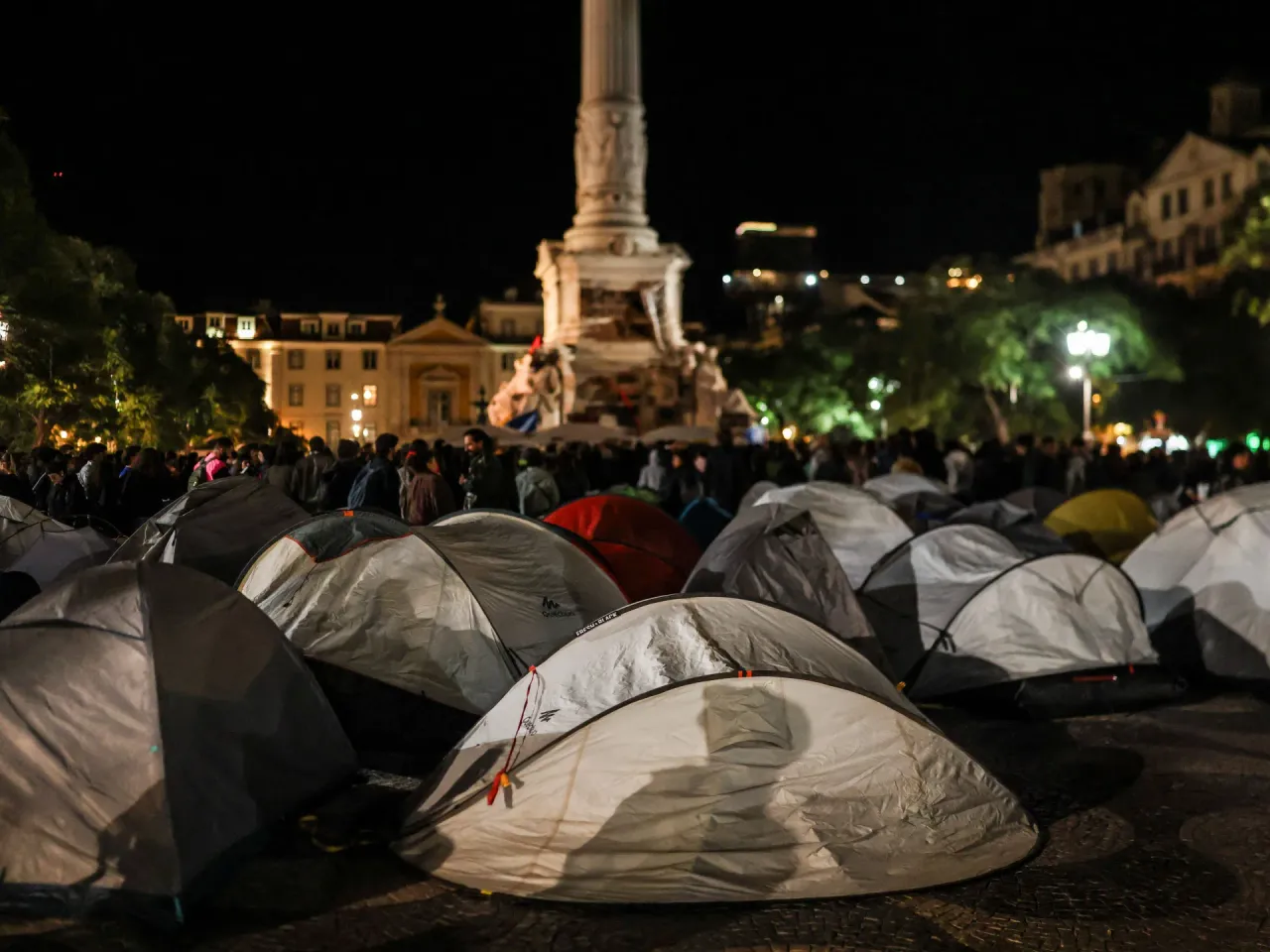
Officers launched coordinated operations in both cities shortly before 6 a.m. local time, after warning protesters that the camps were illegal. Activists had occupied Lisbon's Rossio Square since Saturday, setting up around 200 tents. In Porto, demonstrators had camped at Dom Joao I Square for approximately 10 days. Authorities seized 228 camping structures during the operations.
In Porto, protesters dismantled their own tents after police threatened to intervene. In Lisbon, officers cleared Rossio Square as demonstrators formed a human chain. Clashes subsequently broke out, according to footage broadcast by local television stations.
Carla Valadao, a spokesperson for the Lisbon camp, described the police operation as "very aggressive." Public Security Police superintendent Sergio Soares disputed that account, telling reporters the eviction had been "calm, proportionate and appropriate, with no police charge." All 55 people arrested were later released pending a court appearance in Lisbon on Wednesday.
By Tuesday evening, organizers said more than 1,000 people had gathered at each of the two main protest locations. Demonstrators in Lisbon voted by a show of hands to re-establish their tent camp on Wednesday. Police did not provide crowd estimates.
Protesters are demanding that the centre-right government withdraw a bill that would make evictions easier and end rent caps on new leases. The proposed legislation has already passed its first parliamentary reading.
Debora Miranda, a 41-year-old communications consultant, said she joined the Rossio Square protest to represent generations struggling with soaring costs. "If people don't feel at home, in every sense of the word, they can't move forward with their lives...enough is enough."
Jorge Paixao, a 19-year-old history student, described the situation as "a societal crisis," saying his generation needed "the ability to live with dignity, start families and rejuvenate Portugal."
Portugal is grappling with one of Europe's worst housing affordability crises. Property purchase prices have more than doubled since 2017, while rents for new leases have nearly doubled over the same period. The problem is most acute in major cities such as Lisbon and Porto, where residents have also protested against excessive tourism and an influx of so-called digital nomads — people who travel while working remotely.
The demonstrations mirror similar housing protests in neighbouring Spain, where activists maintain a tent camp in Madrid calling for stronger renter protections. Nearly four weeks of protests there have contributed to political turmoil, with a snap general election called for November 29.
Demonstrations over rising living costs have also taken place in France, Belgium and Italy. Violence that erupted in France over the weekend on the sidelines of otherwise peaceful protests has raised concerns that similar unrest could spread to other countries facing comparable economic pressures.