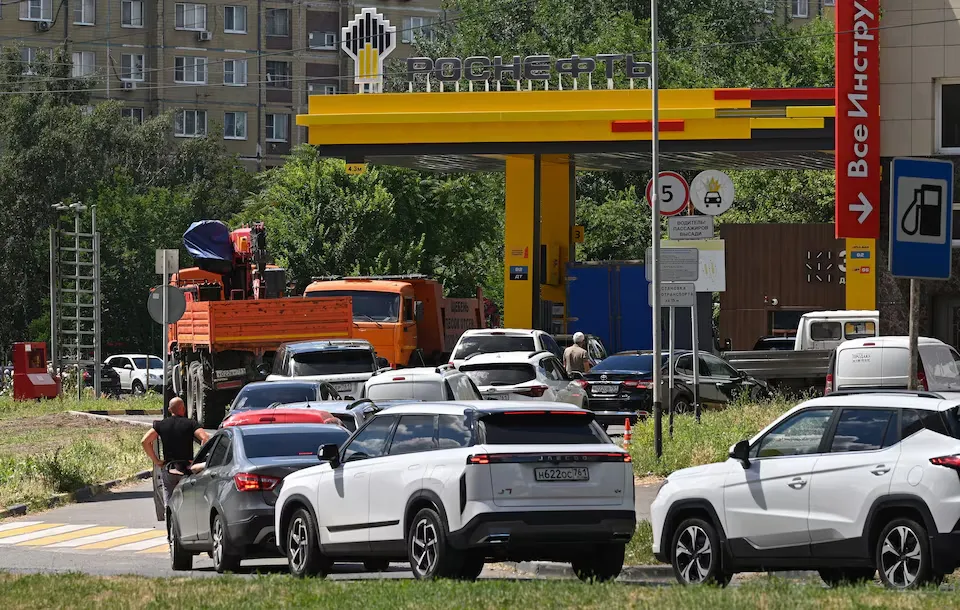
Fuel shortages have spread from Russian-annexed Crimea to parts of southern Russia and, to a lesser extent, Moscow, following Ukrainian attacks on supply infrastructure, according to residents.
Motorists across much of Russia are now subject to fuel purchase limits, with the strictest restrictions reported in Russian-occupied areas of Ukraine, southern Russia and Siberia. While Moscow and a small number of mostly remote regions have no formal restrictions, some filling stations in the capital have closed and others have reported long queues.
President Vladimir Putin acknowledged on Sunday that Ukrainian drone strikes had caused fuel shortages in some regions but said the situation was being addressed.
In Crimea, which Russia annexed in 2014, authorities have suspended fuel sales to private motorists, reduced operating hours for public transport and shortened the opening times of cafes. Ukraine has said its recent attacks on supply lines are part of a campaign targeting Russia's military logistics.
In Sevastopol, motorists queued on Monday after limited gasoline sales resumed, with prices reaching 189 roubles per litre, nearly three times the normal level.
The shortages have also spread to Rostov-on-Don, near the border with southeastern Ukraine, where several petrol stations displayed "no fuel" notices or suspended sales.
"I worked as a courier. I stopped working. Thanks, everybody!" one resident, identified only as Vladimir, said after failing to refuel his motorbike.
In Moscow, where a refinery was damaged in a Ukrainian drone attack last week, fuel prices at major state-run filling stations have remained largely unchanged. However, queues have formed in parts of the city, while some privately owned stations have raised prices by more than 10% to around 80 roubles per litre.