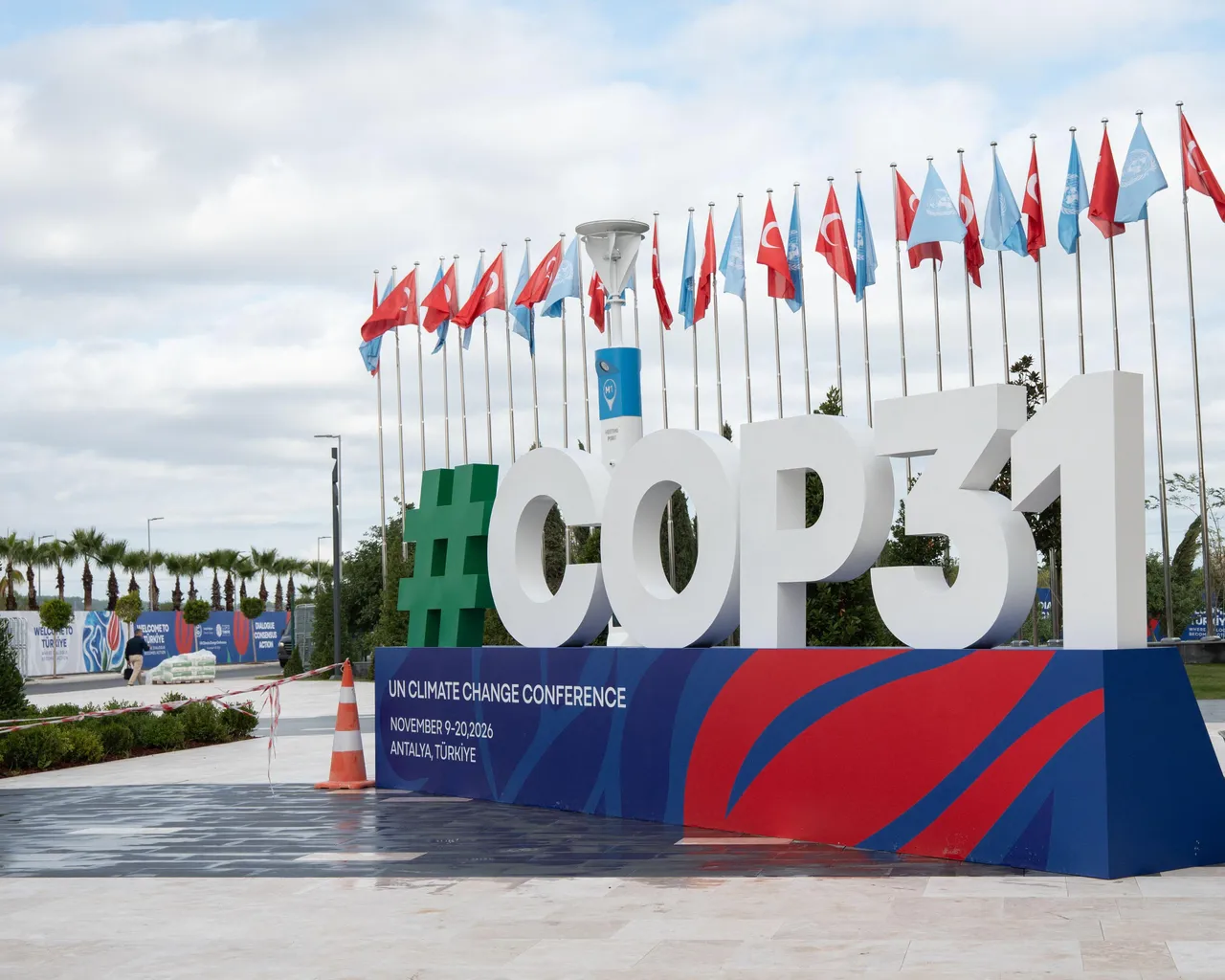
The United Nations annual climate summit, COP31, opened on Monday in Antalya, Turkey, bringing together world leaders, ministers and senior officials from more than 190 countries for two weeks of negotiations running until 20 November.
The talks come amid heightened concern over extreme weather events, including deadly heatwaves across Europe and devastating floods in Nepal. A "super El Niño" in the Pacific is also expected to drive further extreme weather in the months ahead.
In an unusual arrangement, Turkey is hosting the summit but Australia will preside over the formal negotiations, following a compromise deal struck after the two countries competed for the presidency. Turkey will oversee the "action agenda" — voluntary, non-binding programmes working toward the goals of the Paris climate agreement.
Nearly all 196 original signatories of the 2015 Paris Agreement are expected to attend. One notable absence is the United States, after President Donald Trump withdrew the country from the accord.
The formal negotiations led by Australia will focus on work programmes including climate finance, the "just transition" for workers dependent on fossil fuels, and efforts to keep global temperature rises as close as possible to 1.5 degrees Celsius above pre-industrial levels — the central target of the Paris Agreement.
Turkey's action agenda is expected to cover voluntary initiatives on cutting waste, achieving a circular economy, reducing methane emissions, improving food security, and — described as perhaps the most significant — the electrification of the global economy. Turkey is set to launch a global initiative aiming to electrify a third of the world economy.
The 1.5C threshold set by the Paris Agreement has already been breached. The UN argues, however, that rapid cuts to greenhouse gas emissions could limit the extent of the overshoot and allow temperatures to return to lower levels by the end of the century.
To achieve that, countries must accelerate their shift away from fossil fuels and adopt low-carbon technologies more quickly. Two roadmaps produced by Brazil — one on transitioning away from fossil fuels and one on halting deforestation — are expected to present pathways for doing so.
Fossil fuels were not directly addressed in a COP final agreement until 2023 at COP28, due to long-standing opposition from producing nations. That agreement included a resolution to "transition away from fossil fuels" but set no deadline or binding plan. This year, the issue will again be addressed through a non-binding roadmap rather than formal agenda items, which require near-universal consensus.
Developing countries are pressing for greater financial support to cope with worsening climate impacts. Following the floods in Nepal, the country has been granted access to the global fund for "loss and damage" — a mechanism designed to support communities struck by climate-related disasters. However, poorer nations say existing support remains insufficient, and many lack the resources to adapt their infrastructure to increasingly severe weather.
The financial pressure on developing countries has been compounded by cuts to overseas aid from wealthier nations and rising interest rates that have added to debt burdens.
Against a backdrop of geopolitical tension, economic pressures and the rise of far-right political movements in several countries, some observers suggest nations may be tempted to settle for a low-key outcome. However, hopes remain for meaningful progress.
A successful outcome could include acceptance of Brazil's transition roadmaps and a commitment to carry them forward, advances on climate finance for developing countries, a resolution to disputes over climate science within the Intergovernmental Panel on Climate Change, and further development of the just transition mechanism to support workers moving away from fossil fuel industries.