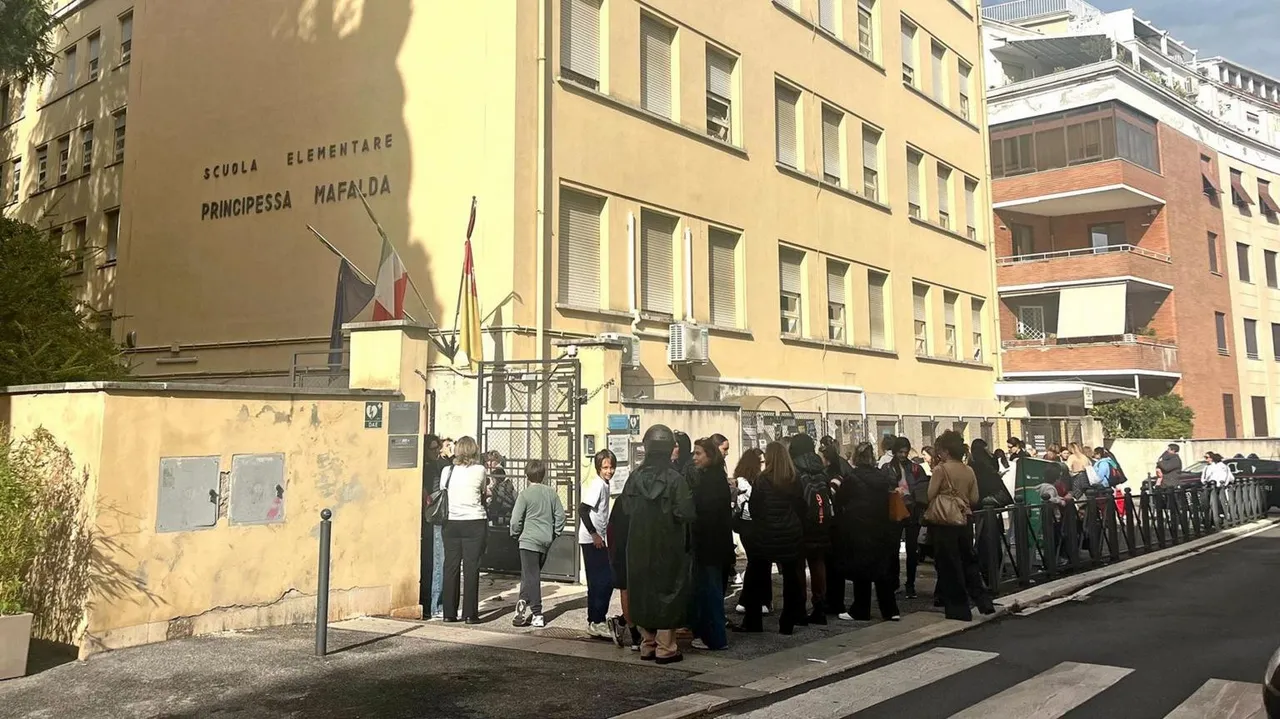
Around 300 schools across Italy received bomb threats on Wednesday, prompting evacuations and a high-level government response, according to Education Minister Giuseppe Valditara.
Valditara described the incidents as probably a "cyber-attack, not a genuine risk," telling Italian television that a clear strategy lay behind the wave of threats. He noted that similar threats had recently targeted flights, supermarkets and hospitals elsewhere in Europe.
Emails were sent to schools in Rome, Naples, Vicenza, Florence, Pisa, Trieste and numerous other Italian cities. A number of buildings were evacuated as a precaution, though the alarm was quickly lifted in several regions and pupils were allowed to return to class.
Italian reports put the number of school head teachers who received threats in recent days at 280, while the education minister cited a figure of around 300.
Prime Minister Giorgia Meloni called a meeting of senior ministers and intelligence chiefs in response to the incidents.
Meloni said the government was closely monitoring the "numerous reports of bomb threats at educational institutions," adding that checks conducted so far had not indicated any evidence of "concrete danger."
"These reports appear rather linked to a strategy intended to cause alarm and concern," she said.
In the central Umbria region, authorities confirmed that searches had found nothing suspicious. "Checks conducted so far in Umbrian schools have proved negative, and law enforcement is working rapidly and carefully to verify each report," regional head Stefania Proietti said in a statement.
The school threats follow a series of bomb hoaxes that struck Italian airports and airlines across Europe last week, causing evacuations and widespread disruption. Although a number of those threats were claimed by an extremist misogynistic group, the group later denied any connection to the false warnings.
In a separate development, more than 300 schools in Northern Ireland received similar threatening emails, which police said they were treating as a hoax. Messages sent to a number of schools in Scotland were also being treated by police as a hoax. It remains unclear whether any of the incidents across the different countries are connected.