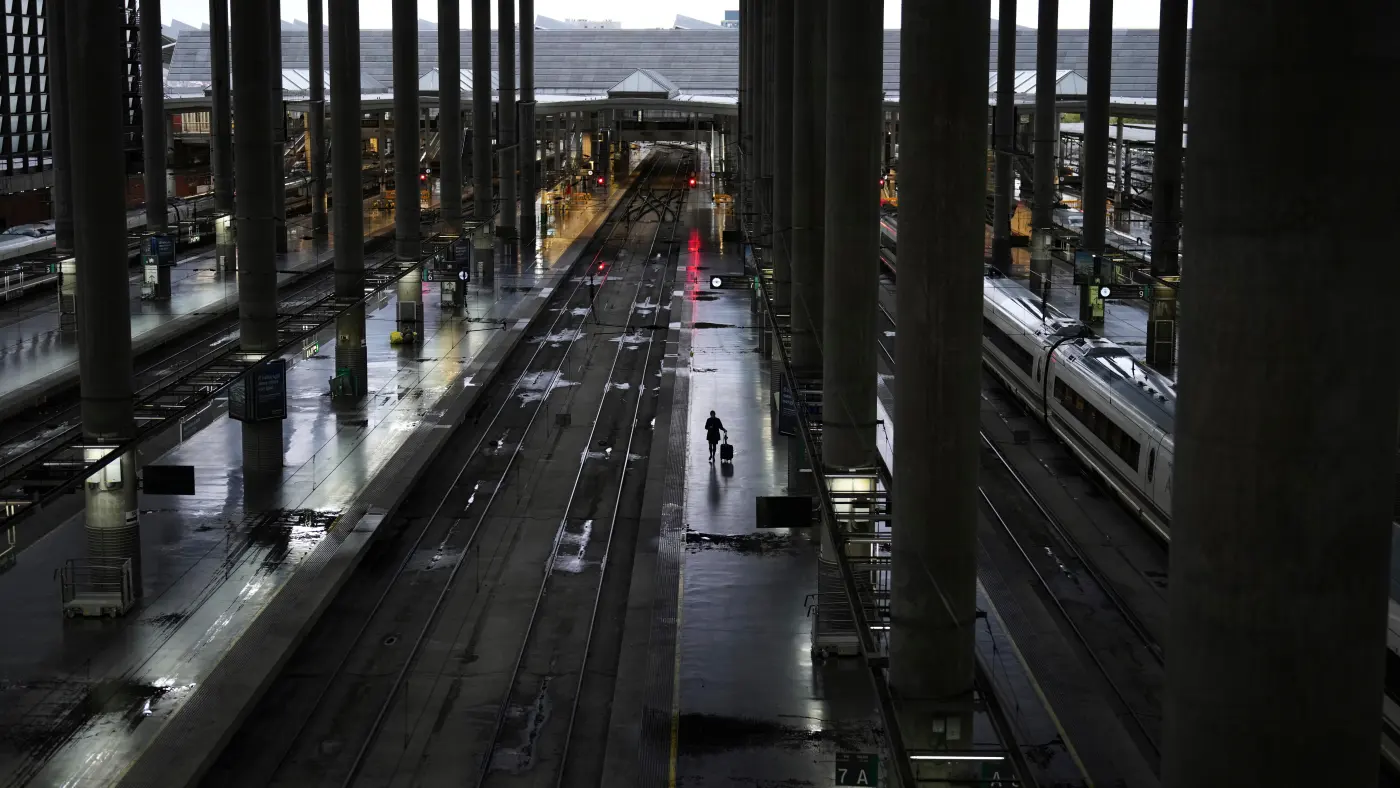
Millions of workers across Spain walked off the job on Wednesday in the country's first general strike in 14 years, demanding government action on a deepening housing crisis and rising cost of living.
The walkout is causing widespread disruption to public transport, slowing factories, and forcing many schools and universities to close or operate at minimal capacity. The strike comes less than three weeks before a national election that could bring the far right to power.
In Barcelona, public transport came to a standstill or faced long delays during the morning rush hour. In Madrid, city buses were the hardest hit, compounded by heavy rainfall in the morning. Unions have called for workers in Madrid to march through the city centre later in the day, with similar gatherings planned in Barcelona and other cities.
Minor incidents were reported in the early hours of the strike, including roadblocks — some involving burning tyres — in Barcelona, and scuffles between picketers and police near the country's main wholesale market on the outskirts of Madrid. At midnight, striking workers set off fireworks as they gathered in public squares in Barcelona.
The two main unions behind the strike, UGT and CCOO, said participation was widespread, "with significant work stoppages in strategic sectors." They reported 90% participation in the automotive and port sectors, 85% in the meat industry, 82% in waste collection, and 75% in the energy sector.
"It's extremely important to remind people that we, the workers — who are also renters or who also pay mortgages — are the ones with the power to halt production and bring the economy to a standstill," said Sandra Mora, spokesperson for the Tenants' Union, speaking to national radio.
The average rent in Spain has nearly doubled over the past decade, fuelling public anger and squeezing household budgets. "There is one issue that is dividing the country: the struggle to access housing," said Unai Sordo, secretary general of CCOO, on Cadena Ser radio.
Public outrage over housing reached a peak following the nationally televised eviction of an 87-year-old woman from her Madrid home last month. The subsequent death of the woman, widely known as Maricarmen, deepened public indignation and made her a symbol of Spaniards struggling with unaffordable rents and no prospect of homeownership.
Housing activists used the uproar over Maricarmen's eviction to call for the general strike, quickly winning the backing of the UGT and CCOO unions.
Activists are demanding the elimination of tourist apartments, a crackdown on real estate speculation, and automatic lease renewals to protect renters. The unions are also calling for greater government intervention in the housing market and a new minimum wage agreement through negotiations with the business owners' association.
The nationwide protests that followed Maricarmen's eviction prompted the government to push through emergency measures to limit evictions and support tenants. However, right-wing parties in parliament refused to ratify the measures, arguing they would drive properties out of the rental market.
Prime Minister Pedro Sanchez responded by calling a snap election on 5 October, seeking four more years in power for his left-wing coalition. His campaign, however, has been overshadowed by a deadly high-speed train collision — Spain's second fatal rail disaster of the year — which killed 69 people and has dominated national news coverage in recent weeks.
Wednesday's strike has brought together workers, activists, politicians, and ordinary citizens around the shared issue of accessible housing, as Spain heads into one of its most consequential elections in years.