Thousands of schools across Italy, Scotland and Northern Ireland received identical hoax bomb threat emails on Wednesday, triggering mass evacuations and prompting government-level responses across Europe.
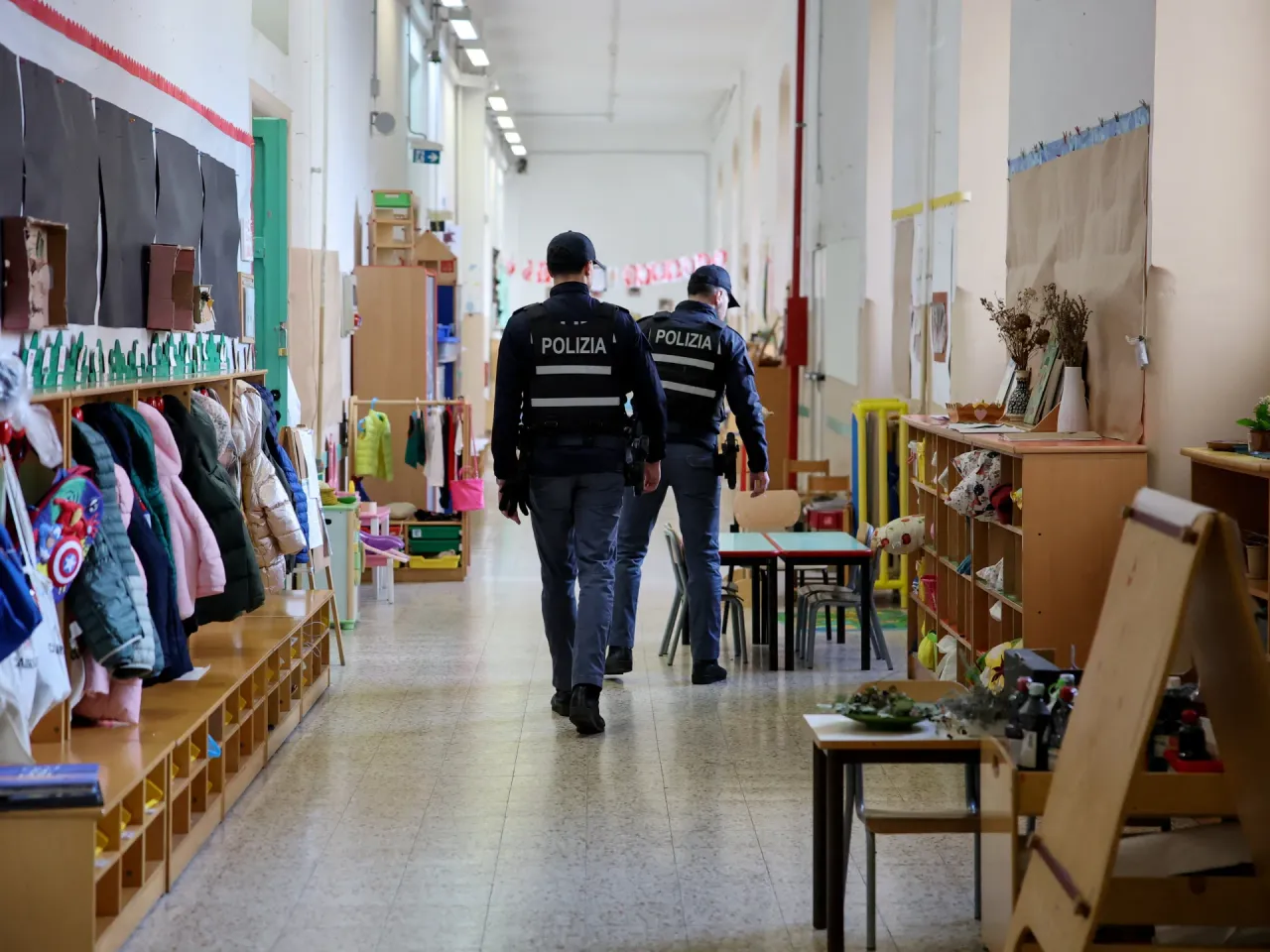
In Italy, approximately 6,300 schools received the same threatening email. Italian Education Minister Giuseppe Valditara told broadcaster La7 that at least 300 schools were evacuated, adding that the number could rise.
Italian Prime Minister Giorgia Meloni said there was no indication of any concrete danger, but confirmed that investigations were under way and that a meeting of government ministers had been convened.
"It is clear that there is a strategy at play," Valditara said. "It is difficult to say right now who might be behind this. Intelligence services are, of course, working to identify them."
He added: "There is no need for alarmism as the content of the emails makes it clear that any concrete risk is virtually nonexistent. In all likelihood, this is a cyberattack rather than a genuine threat."
The email also included a threat directed at Prime Minister Meloni and was reportedly signed by "Mikhail Andropov, leader of the Vilayat of Misoginistan", according to sources citing a copy of the message. The same purported author claimed responsibility for email bomb threats sent on Friday to newsrooms in Ireland and Bulgaria.
In Scotland and Northern Ireland, a large number of schools also received threatening emails on Wednesday. The Northern Ireland Education Authority advised schools to remain open after police determined the threats were not credible.
"The message has similarities with a bogus threat sent last month, which was declared a hoax by PSNI [Police Service of Northern Ireland]," the Education Authority said.
Police Scotland similarly assessed the messages as non-credible and confirmed they are being treated as hoaxes. The force said its cyber and fraud unit is working to establish the source of the messages, liaising with law enforcement across the United Kingdom and internationally. Scotland had experienced a similar mass bomb hoax email sent to schools on October 19.
Wednesday's alerts came amid growing concern across Europe about a pattern of hybrid warfare-style disruptions. This month, flights across the continent have been diverted, grounded, or escorted by fighter jets in response to waves of bomb threats.
Cyberattacks have also targeted supermarkets in several European cities, with hackers manipulating refrigeration temperatures in an apparent attempt to spoil food. Last week, refrigeration systems at supermarkets in Germany, Romania and the United Kingdom were compromised. The incidents mirrored a similar cyberattack that affected hundreds of supermarkets across France in October.
On Tuesday, France summoned Iran's ambassador after accusing Tehran of responsibility for the French supermarket cyberattack. Tehran rejected the accusations as "baseless" and "hostile". The October incident has led some to consider Iran a suspect in connection with Wednesday's hoax bomb threats.
Some European officials suspect Russia of orchestrating a broader campaign to disrupt daily life in countries supporting Ukraine following Moscow's full-scale invasion. Russia has denied the accusations, describing them as a smear campaign.