El Salvador's military has destroyed the headquarters of one of Haiti's most powerful criminal organisations, President Nayib Bukele announced on Tuesday.
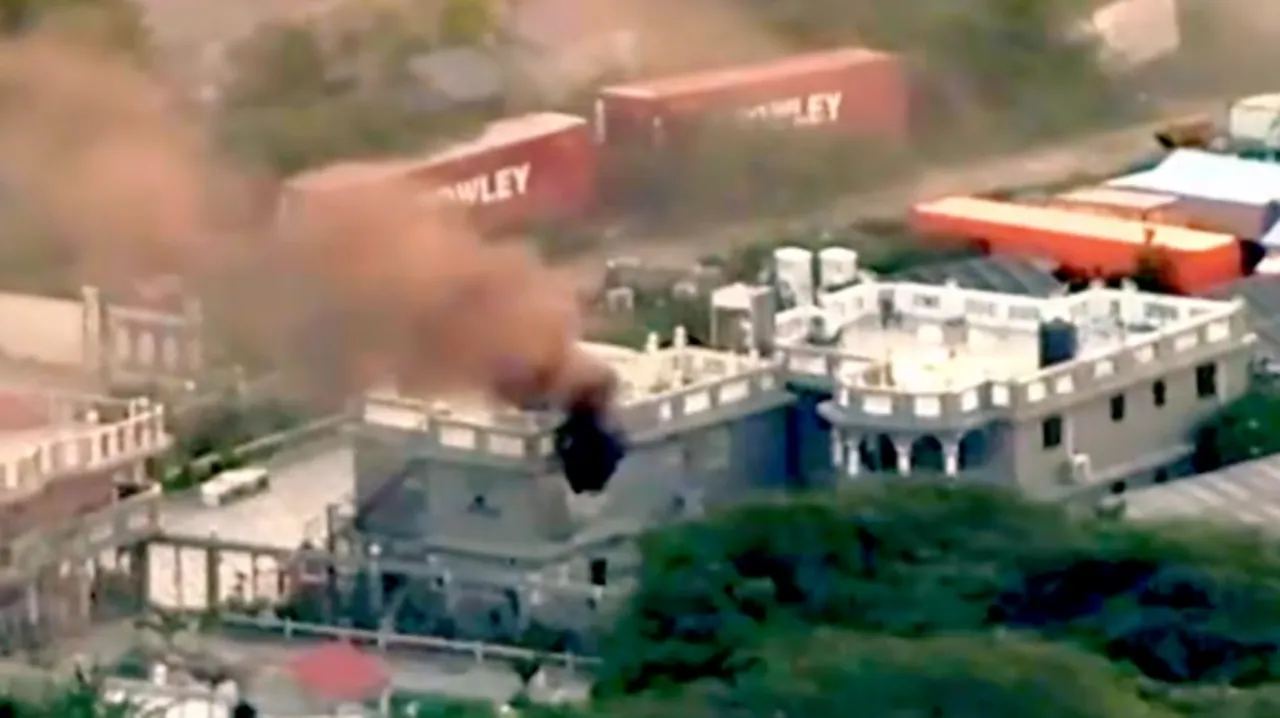
The target was the 400 Mawozo gang, known for kidnappings, extortion, murders and arms trafficking. The attack struck a large compound in Croix-des-Bouquets, a suburb on the outskirts of Haiti's capital, Port-au-Prince, described as the gang's stronghold.
The operation involved a combined ground and air assault. Haiti's National Police drone task force participated in the attack, supported by Salvadoran soldiers, according to sources.
Bukele announced the strike on social media platform X, posting video footage showing several helicopters firing on the compound. "We destroyed the house of [gang leader] Lanmò San Jou and the 400 Mawozo gang's headquarters," he wrote.
In the footage, dozens of people can be seen fleeing the property as the helicopters circle overhead. Bukele noted that most gang members fled without attempting to fight back.
The gang's leader, Wilson "Lanmò San Jou" Joseph, was reportedly not present at the compound at the time of the strike. Reports indicate the gang leader had requested the United Nations to begin talks just days before the attack.
Several media outlets have reported that as many as 20 people were killed in the strike, though this has not been confirmed by authorities. There has also been no official confirmation of the full extent of the damage, with some Haitians questioning whether the compound was destroyed or only partially damaged.
This was El Salvador's first military action against a Haitian target since it deployed soldiers there last month. The deployment followed the abduction at gunpoint of four Salvadoran air force technicians while they were food shopping in October. The technicians were working as part of the UN-backed Gang Suppression Force (GSF), a multinational mission initially led by soldiers from Chad.
Bukele has vowed to bring the four men home alive and warned the gang to release them immediately or face sustained military pressure.
Reports place the number of Salvadoran troops currently deployed in Haiti at between 2,000 and 2,500.
Haitian Prime Minister Alix Didier Fils-Aimé thanked El Salvador for its commitment following the strikes. "THE GANGS WILL GET NO SLEEP!" he wrote on X, adding that the two nations would continue working together with the GSF to "regain control of the territory and restore state authority."
The deployment and the strike have drawn scrutiny. Critics have raised concerns that not all Salvadoran troops are operating within the GSF command structure, prompting questions about the operational legitimacy and legality of their actions in Haiti.
Amnesty International has urged both governments to "ensure all operations conducted by Salvadoran forces in Haiti comply with international human rights law."
The 400 Mawozo gang is considered the largest criminal organisation in Haiti. The country, the poorest in the Americas, remains largely under gang control. The United Nations has reported that at least 5,700 people were killed or injured by gangs or during operations against them between 1 January and 11 September this year alone.
El Salvador has recorded significant reductions in gang violence under Bukele following a sweeping domestic crackdown. Human rights groups, however, have criticised the methods used, citing the open-ended extension of emergency laws, the treatment of detainees in El Salvador's high-security mega-prison, and the mass trials of alleged gang members.