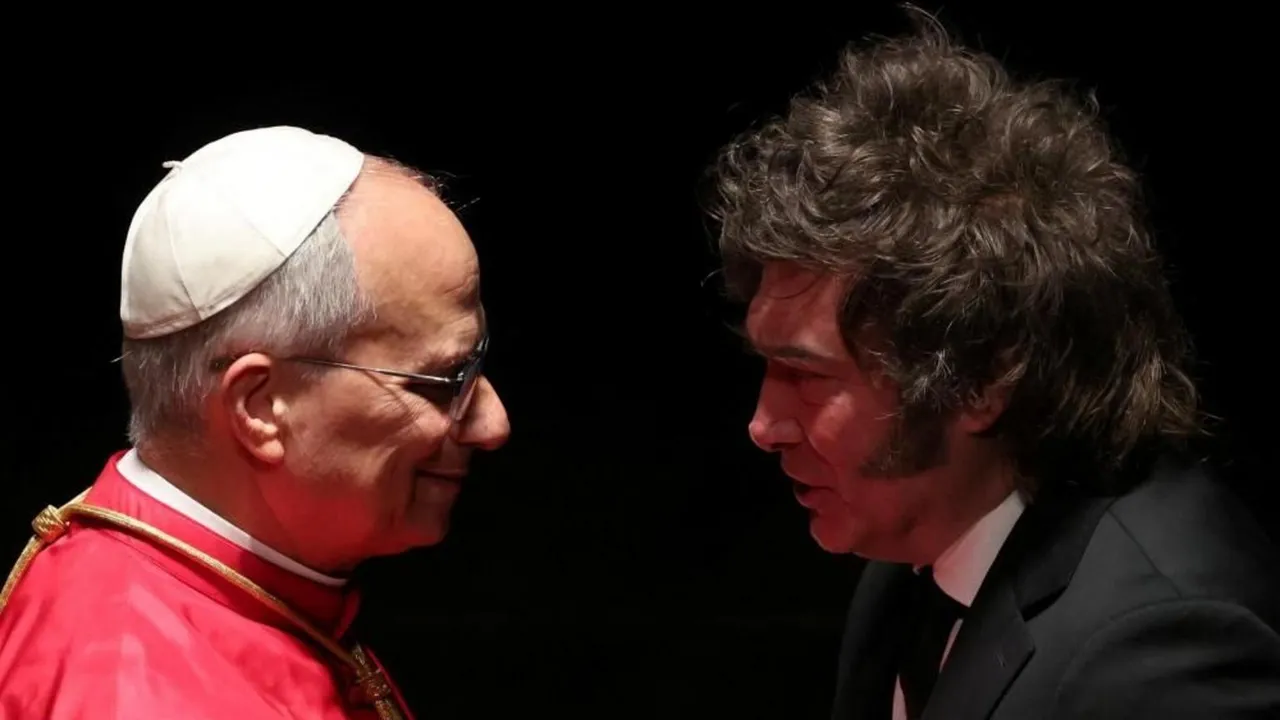
Pope Leo XIV has called on Argentina's economy to serve all its people, including the poor, in a pointed but diplomatic address delivered in Buenos Aires on Sunday.
"The economy must be at the service of the people, rather than people being at the service of the economy," the Pope said shortly after landing in the Argentine capital, the second stop on a 12-day tour of Latin America.
The visit is the first by a pontiff to Argentina in nearly four decades. It comes just three weeks after Leo, 71, underwent surgery to remove a lung tumour. The Vatican has said the operation was successful, the cancer has not spread, and no extraordinary health measures are in place during the trip.
Leo stressed the plight of those who, "despite hard work, nonetheless struggle to meet their household's needs." He urged that "particular concern be shown for those affected by illness, dependency and disability" — widely interpreted as a reference to the government's controversial cuts to disability assistance.
In what appeared to be a rebuke of President Javier Milei's combative public style, the Pope said strengthening democracy required a "willingness to listen" and the "careful use of words." He also called on those in authority to "act with prudence, to acknowledge the limits of the power entrusted to them, and to direct their decisions toward the good of the entire community."
He further stressed the importance of "personal integrity" in public office, warning that "corruption undermines the confidence of citizens in their institutions."
Milei, who came to power promising to revive Argentina's economy by drastically shrinking the welfare state, has targeted public hospitals, universities, pensioners and disability services. The country's poverty rate rose to 32.3% in September, though inflation has since fallen sharply — a key point of pride for the president and his supporters.
In his own address welcoming the Pope, Milei defended his libertarian policies, saying the rights to life, liberty and property form the backbone of Argentina's constitution and of Western democracies. He said his government was working to avoid "punishing the Argentines of tomorrow in order to benefit the Argentines of today."
Milei had previously been sharply critical of Leo's predecessor, Pope Francis, calling him an "imbecile" and "evil on earth" for championing social justice and pro-poor teachings. On Sunday, however, he struck a conciliatory tone, describing Francis as an "exceptional figure" and "undoubtedly the most important Argentine in history." He had also written on X ahead of the visit that Argentina awaited the Pope "with immense joy."
Leo said he was "retracing" Francis's steps. Francis, who was Argentine, did not return to his homeland during his own papacy, a source of lasting disappointment for many in the country.
The visit arrives at a moment of deep social division. Hundreds gathered outside the presidential palace chanting "Papa Leon," while others lined the streets hoping the Pope's presence might help unite a country bitterly split between Milei's supporters and opponents. "Just like the World Cup unites us, hopefully the pope will too," said Liliana Deblauwe, a 68-year-old retired teacher who waited with crowds to see Leo visit a monument to liberation hero Jose de San Martin.
Brian Inacio Rodriguez, a 26-year-old job seeker, travelled five days overland from Ushuaia, at the southern tip of South America, to see the pontiff. He said he hoped Leo would bring "much peace to Argentina."
The church expects up to 7 million people to attend the various events during the Argentine leg of the tour. Leo is scheduled to visit a home for disabled people and a prison, and to celebrate three open-air masses.
Leo arrived in Buenos Aires from Uruguay, where he began the trip. In Uruguay, he condemned drug violence and called for an end to child poverty.
According to a recent University of Buenos Aires poll, 57.7% of Argentines now identify as Catholic, down from around 90% in the 1960s. The visit is seen in part as an effort to reinvigorate the faith in a country that has grown increasingly secular.