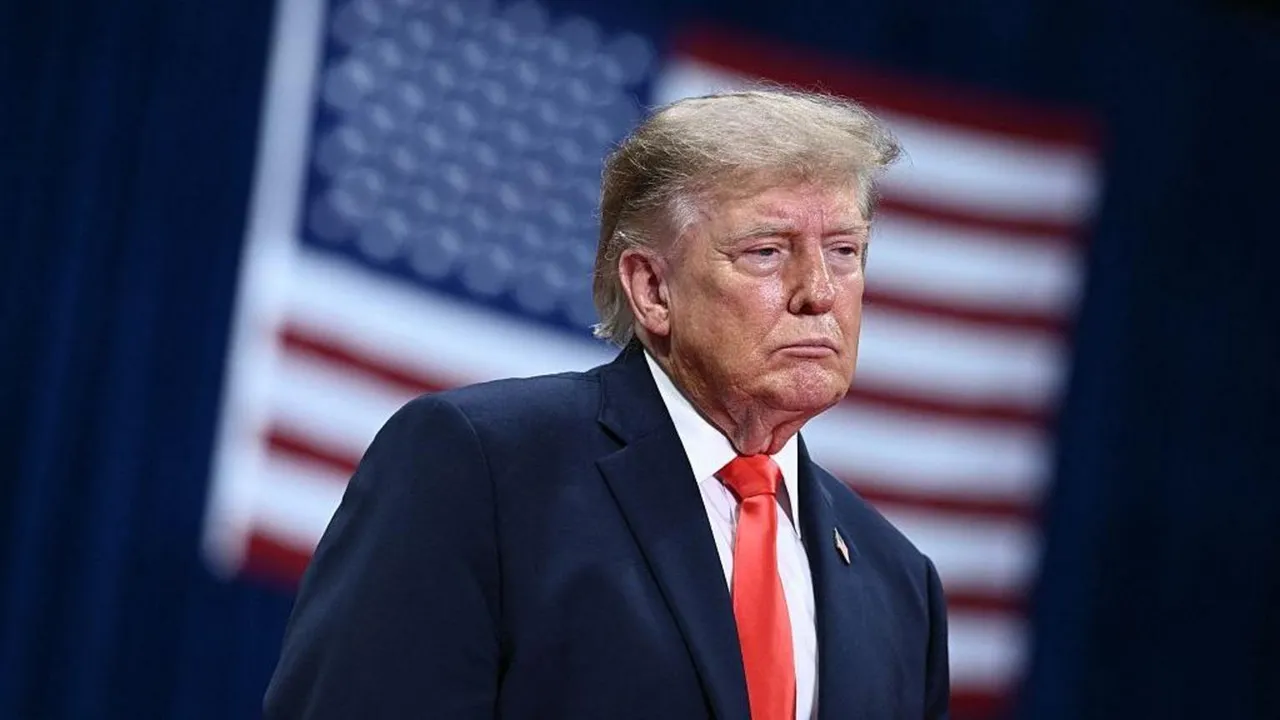
A federal judge in Florida has allowed US President Donald Trump's $10 billion defamation lawsuit against the BBC to proceed, partially denying the broadcaster's motion to dismiss the case.
Judge Jeffrey Kuntz ruled on Tuesday that Trump had sufficiently pleaded his defamation claims, though he did not rule on the merits of the case. "Whether President Trump can prove these claims and establish he sustained damages at summary judgment or trial is left for another day," Kuntz wrote in his order.
The lawsuit stems from a Panorama documentary titled "Trump: A Second Chance," which spliced together two sections of a speech Trump delivered outside the US Capitol on 6 January 2021, before the riot that followed. The two comments were nearly 55 minutes apart in the original speech.
The BBC previously apologised, acknowledging that the broadcast had given "the mistaken impression that Trump made a direct call for violent action."
Trump's lawsuit, filed in Florida, accuses the BBC of "intentionally, maliciously and deceptively doctoring" the speech. The president valued his defamation claim at $10 billion, equivalent to approximately £7.5 billion.
Judge Kuntz addressed the editing decision directly in his ruling. "On its face, the editing may independently establish the plausibility of actual malice," he wrote. "BBC tries to frame this editing as ordinary editing done to condense a seventy-minute-long speech into twelve seconds. But the Court is not persuaded."
The judge elaborated further: "Editing is often required. However, given the time disparity between the two statements, the distance itself tends toward a plausible inference that BBC knew or should have known that the segment they were creating would not and could not have been a truthful statement. This was not trimming around the edges but creating something different than what was stated in the speech."
Kuntz also cited what he described as a broader pattern, writing that "such examples can be said to be probative of BBC's state of mind as it pertains to recklessness in light of BBC's non-action toward false statements about Trump." He added that "Trump's allegations regarding BBC's departure from journalistic standards are more than enough to plausibly alleged more than mere negligence."
The judge also noted that Trump had "sufficiently pleaded" actual malice, the legal standard required for a public figure to win a defamation case, though Trump will still need to prove this at trial.
Kuntz further ruled that Trump will need to demonstrate he suffered actual damages from the airing of the documentary, which was not broadcast in Florida.
The BBC had sought to have the entire lawsuit dismissed, arguing the programme did not meet the legal criteria for defamation and was not available in the United States.
However, one part of the lawsuit was dismissed. Kuntz threw out Trump's claim that the BBC had violated Florida's Deceptive and Unfair Trade Practices Act, ruling that the documentary did not constitute commercial speech.
Trump welcomed the ruling on his Truth Social platform, calling it a "huge victory." "We will continue fighting against, and defeating, all of those who try to deceive the American People!" he wrote.
A BBC spokesperson responded: "We are surprised by this decision but respect the Court's authority and note the case will now proceed to the next stage. We remain confident in our position and will continue to respond through the proper legal process."
In a separate development, a Florida magistrate judge ruled in late October that Trump must sit for a deposition conducted by BBC lawyers by 11 December, or face potential sanctions.