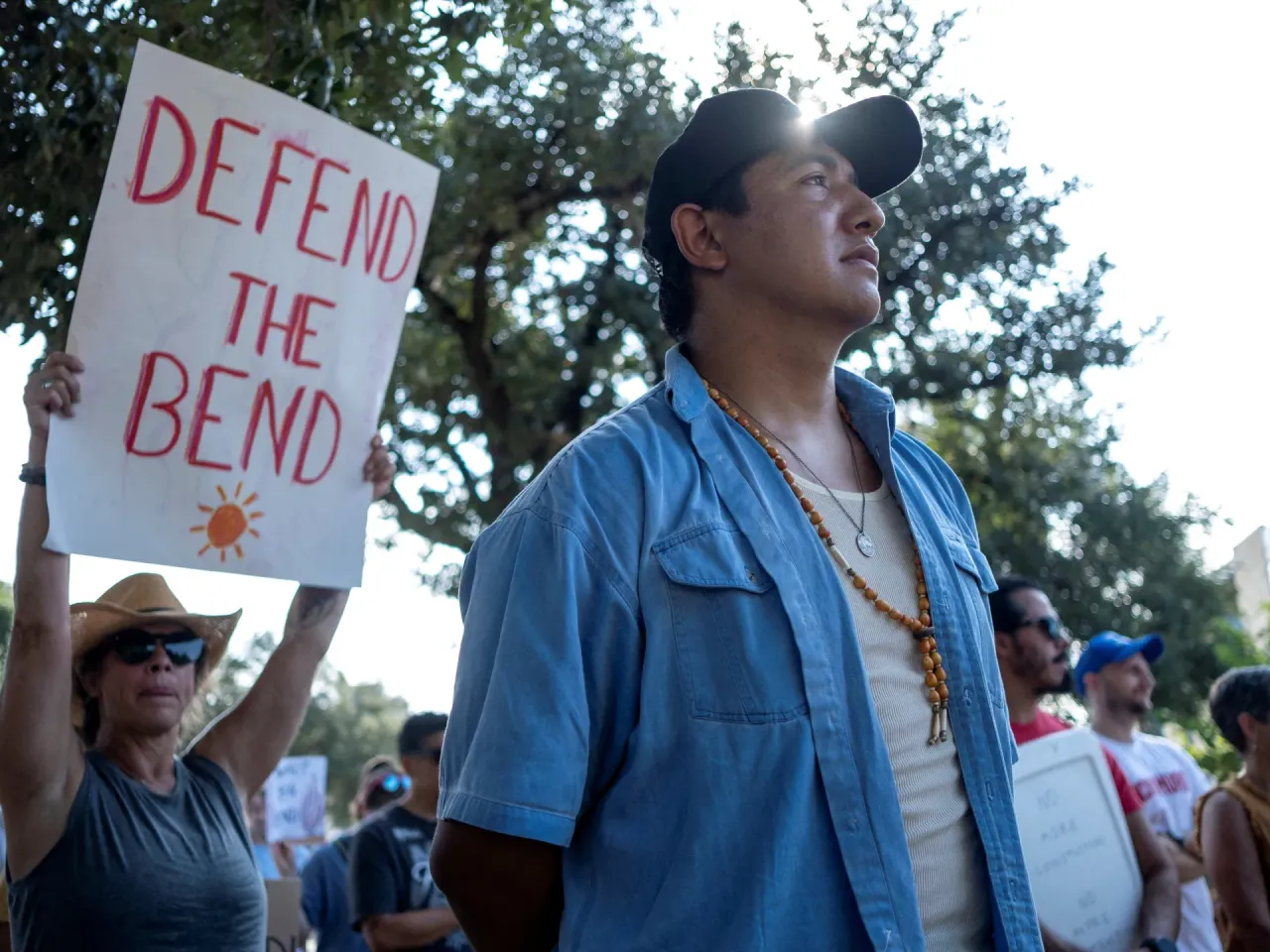
The United States Supreme Court has allowed the Trump administration to proceed with construction of a border wall through a remote section of Big Bend National Park in West Texas, lifting a lower court injunction that had paused the project.
In a five-page unsigned decision issued Monday, the court granted the government's emergency request, writing that the injunction "impedes the Government from advancing its 'compelling interests' in border security and integrity." Justice Ketanji Brown Jackson was the sole dissenter and did not explain her reasoning.
The ruling allows construction to resume while litigation over the project continues.
The planned infrastructure includes 30-foot-tall steel barriers, patrol roads, surveillance systems and other border security installations. The Big Bend Sector covers a nearly 500-mile stretch of the US-Mexico border, accounting for more than a quarter of its total length.
The Supreme Court found that US District Judge Kathleen Cardone, who had blocked construction in October, lacked jurisdiction under the 1996 Illegal Immigration Reform and Immigrant Responsibility Act. That law limits the ability of lower courts to rule on border barriers, restricting district courts to hearing only claims alleging a violation of the US Constitution.
The court said the government was "exceedingly likely to prevail" on that argument and found that the challengers' claim did not qualify, writing that "there is no such thing as a 'constitutional' major-questions claim."
In her October ruling, Cardone had noted that while the Big Bend sector makes up more than 25 percent of the US-Mexico border, it accounts for only 0.3 to 2.2 percent of migrant apprehensions. "Therefore, if the Big Bend Sector is an area of high illegal entry, so is every other sector, and the waiver authority would apply to the entire US-Mexico border," she wrote.
The Supreme Court also found that federal law allows the Department of Homeland Security to waive environmental protections and conservation laws, describing this as a "clear preference for expeditious border construction over the very harms respondents assert."
The lawsuit was brought by the Center for Biological Diversity, an environmental advocacy group, along with Friends of the Ruidosa Church, a local nonprofit working to preserve a historic church near the border, and a landowner who stands to lose border property. The plaintiffs had challenged waivers used by the Department of Homeland Security to fast-track construction and bypass laws including the Endangered Species Act, the National Environmental Policy Act and the National Historic Preservation Act.
"This decision greenlights the contractors and allows the bulldozers to come roaring back into the region," said Laiken Jordahl of the Center for Biological Diversity. "It allows the dynamiting of national park canyon walls, the bulldozing of pristine desert."
In its emergency application to the Supreme Court, the government argued that any gap in border defenses in the Big Bend region "would act as a dangerous magnet for cartels and other bad actors." Solicitor General John Sauer called the lower court injunction "baseless" and "unprecedented," warning that an unbarricaded stretch would "become a funnel point for illegal alien crossings that are thwarted by barriers elsewhere."
Big Bend National Park encompasses mountain ranges and desert terrain and is home to endangered species including the Mexican long-nosed bat. Opponents of the project say construction would disrupt what they describe as one of the most ecologically and culturally significant landscapes in the United States, with concerns ranging from environmental damage and threats to Indigenous sites to the impact on the region's tourism-based economy and wildlife.
The project has drawn bipartisan opposition. Historically, the Big Bend area's rugged and unforgiving terrain has meant fewer people attempting to cross into the US through this section of the border, and it regularly records the fewest number of encounters along the Texas border, according to customs and border protection data.
A separate lawsuit was filed in September by Texas landowners who claim their constitutional rights are being violated by the federal government's border barrier plans in the area.